
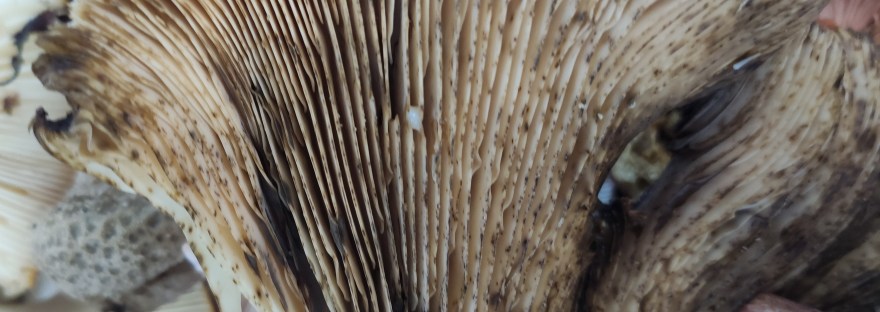

On a lovely foraging workshop in October, led by the delightful Nicole from Howth Foraging – in a mixed woodland in County Dublin, Ireland, I spotted many treasures, not necessarily good for eating, but catching my eye none-the-less. My favourite find was the so-called Ugly Milkcap, Lactarius turpis. I have an affection for things nicknamed ‘ugly’ since that is something I was teased with in high school, so I’m reclaiming it and sending loving vibes their way, there’s always more than meets the eye and visual beauty is entirely subjective. Perhaps that experience is also a reason I find it easier to have a connection with fungi, over other humans!
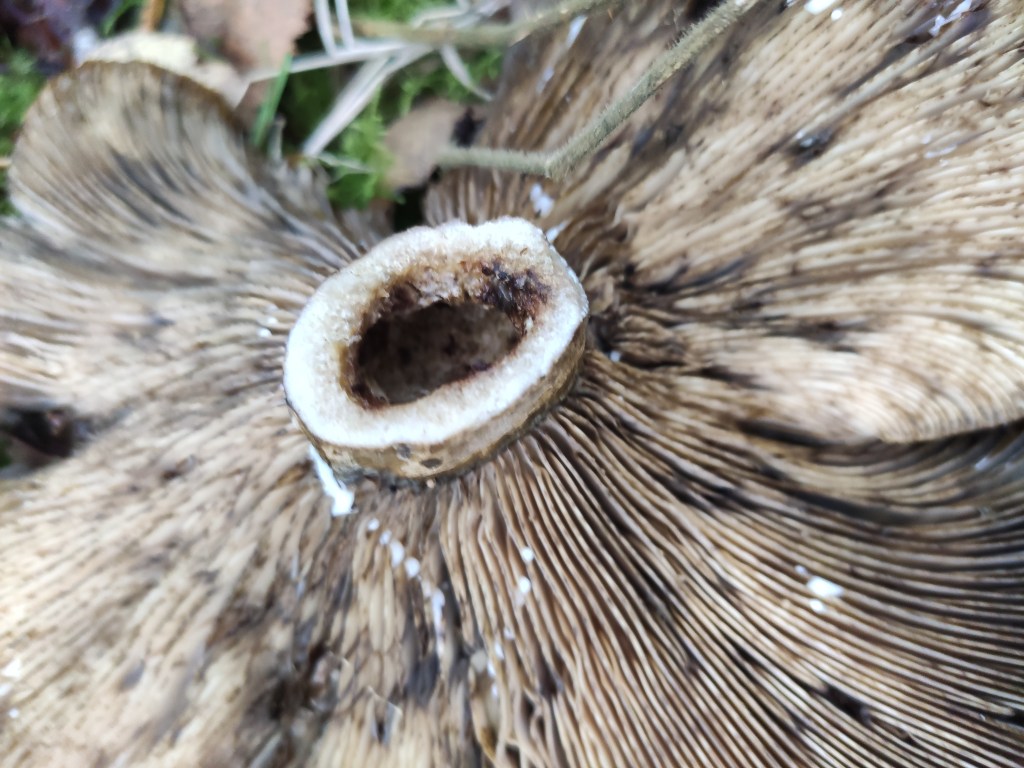
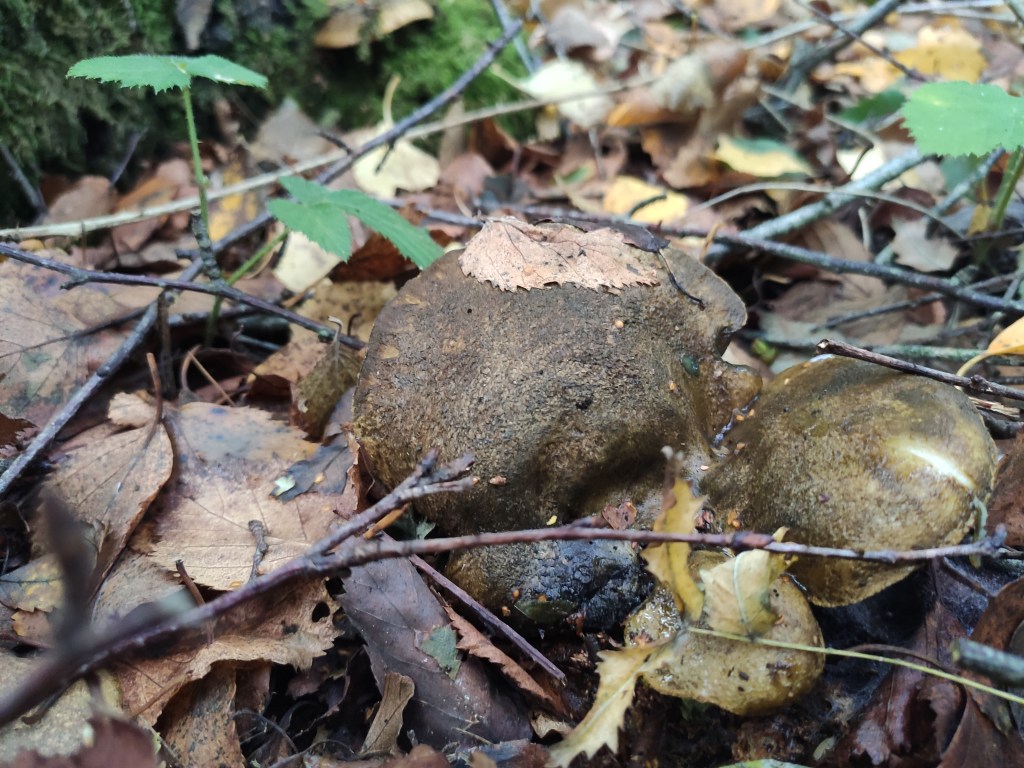
These wonderful souls were camouflaged amongst the autumnal leaves, their caps an unmistakeable, brown-ish and grubby looking. There were two that we spotted, and they were quite large, with irregularly shaped caps, around 12- 15cm across, possibly larger, so they must have been quite mature. When young they are smaller and more round with an inrolled margin. The caps are known to be slimy when wet and duller when dry. The gills are pale cream turning spotted brown or sepia when bruised or older. They exude a milky white latex substance from their gills when broken, that is acrid and hot. On this occasion I didn’t taste the milk!
Ugly Milkcaps are known to be ectomycorrizhal with birch trees, in this mixed woodland there were birches dotted around frequently.
People often talk generally about fungi being essential to ecosystems, the unsung heroes of biodiversity and providing nutrients to other plant life, the mycorrizhal relationship is a great example of this. Mycorrizhal fungi are thought to occur with around 90-95% of plants. The fungi form complex cell structures in and around the roots of plants, in the case of ectomycorrizhal, this occurs around the root cells – contrasting with certain other types of mycorrizhae that penetrate the root cell walls. The fungus and host plant exchange nutrients, with the fungus providing nutrients that it can solubilise and the plant cannot, to the plant, in exchange for sugars and carbon. In addition, mycorrizhal fungi are known to support immune responses for their host plant.

At the very least, the knowledge of these incredible, complex relationships clearly highlights the importance of soil conservation, looking at soil ecosystems as whole, monitoring disturbance and erosion and considering fungi as part of carbon sinks too.
National Biodiversity Data Centre with records for Ireland holds 23 records from 1925 to 2009, from August to October. One record is in Kerry and most of the others are concentrated to County Dublin. Cate2 for the UK holds 4342 from 1900 to 2022, distributed fairly evenly on the mainland of Britain and the Isle of Man.
Basic Profile
Scientific name: Lactarius turpis also Lactarius necator / Lactarius plumbeus
Common names: Most commonly Ugly milkcap, also murder fungus!
Size of fruiting body: Caps 5 – 20cm across,
Spores: 6.5-7.5 x 5.5-6 µm
Gills:
Edibility: Not recommended, as some evidence shows them to be carcinogenic
Lookalikes: Lactarius blennius, is associated with beech, not birch and is plaer
On the Red Data List (extinct/critically endangered/endangered/vulnerable/near threatened): No

 Mushroomination