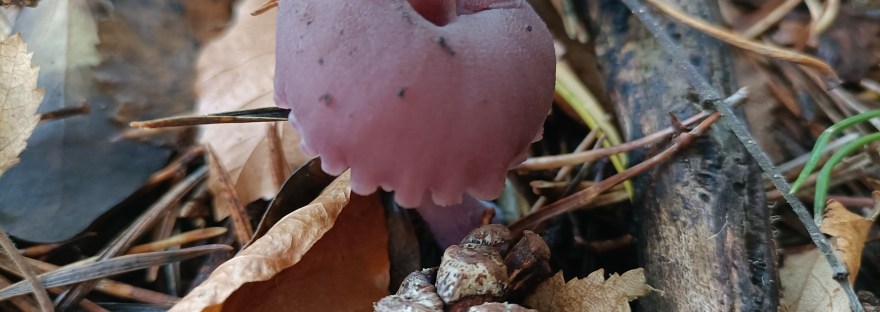
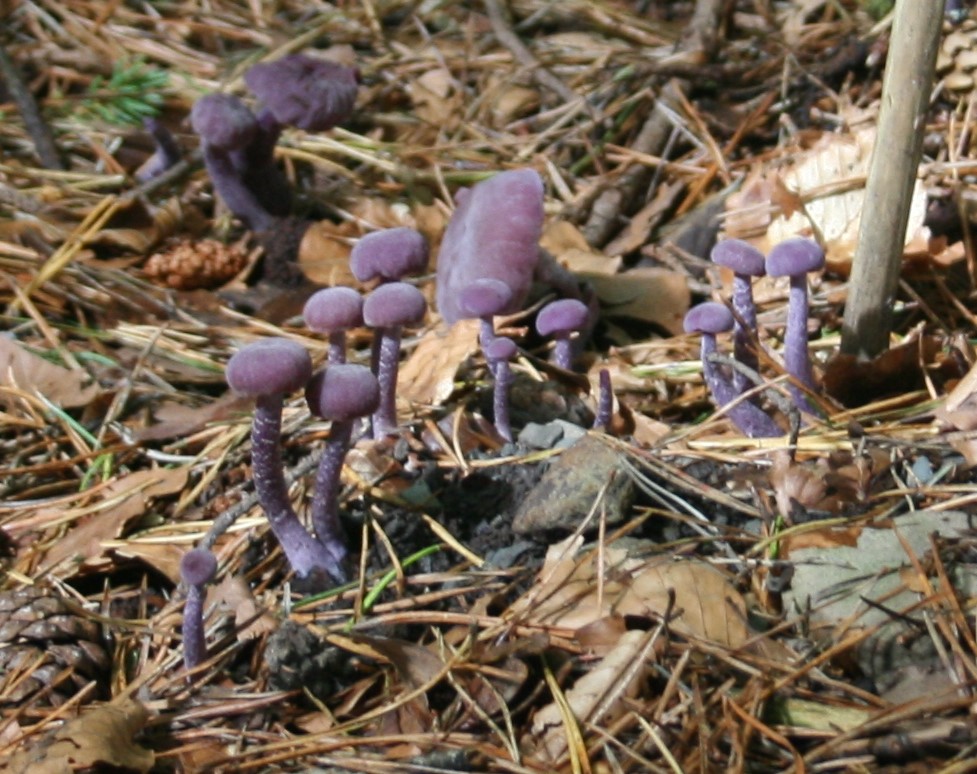
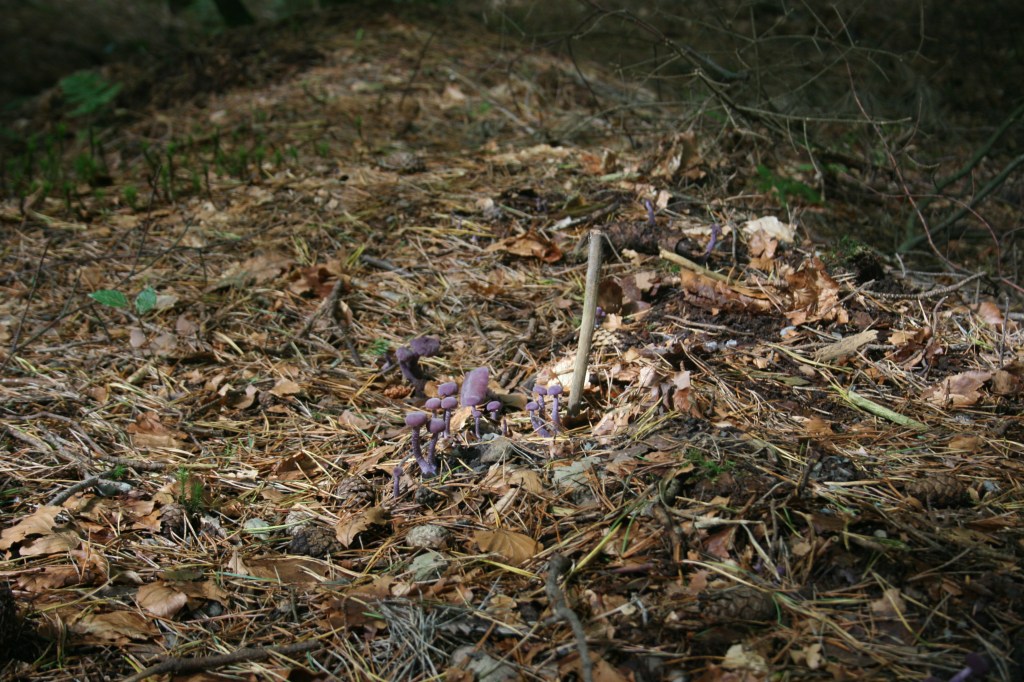
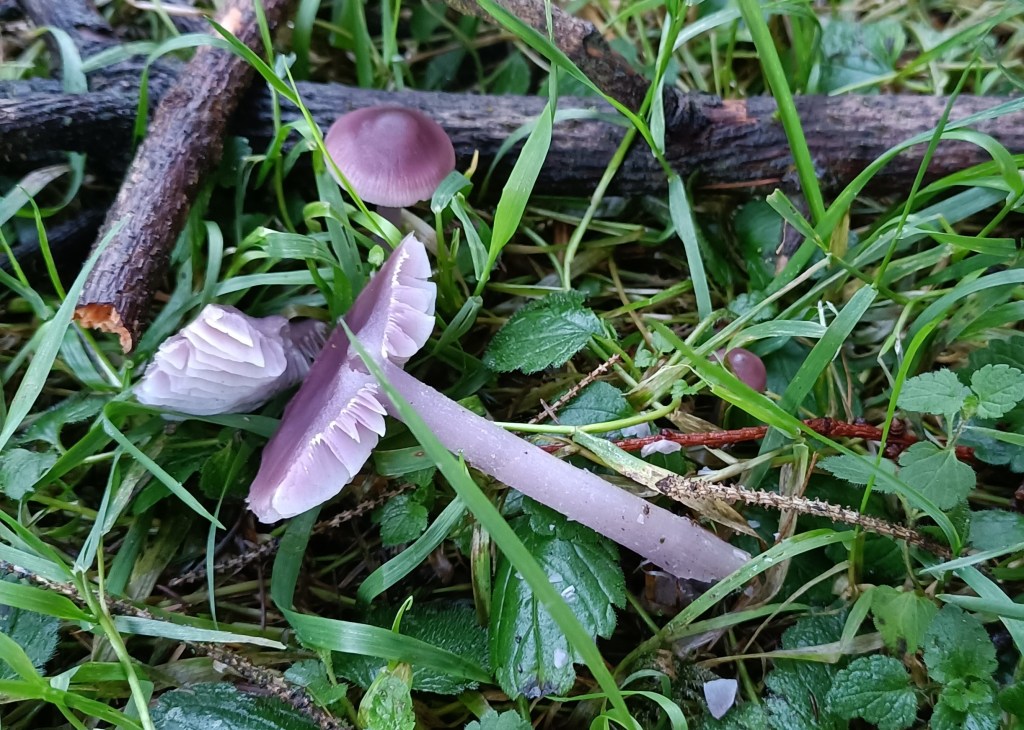
Laccaria amethystina, Amethyst Deceiver, is another of my favourites, on account of its distinct colour. They can camouflage amongst the autumnal leaves and other forest litter in dark woods, in their majestic plum tones, but even more so when older when they can be mistaken for their close relative – Laccaria laccata, The Deceiver, as they grow paler.
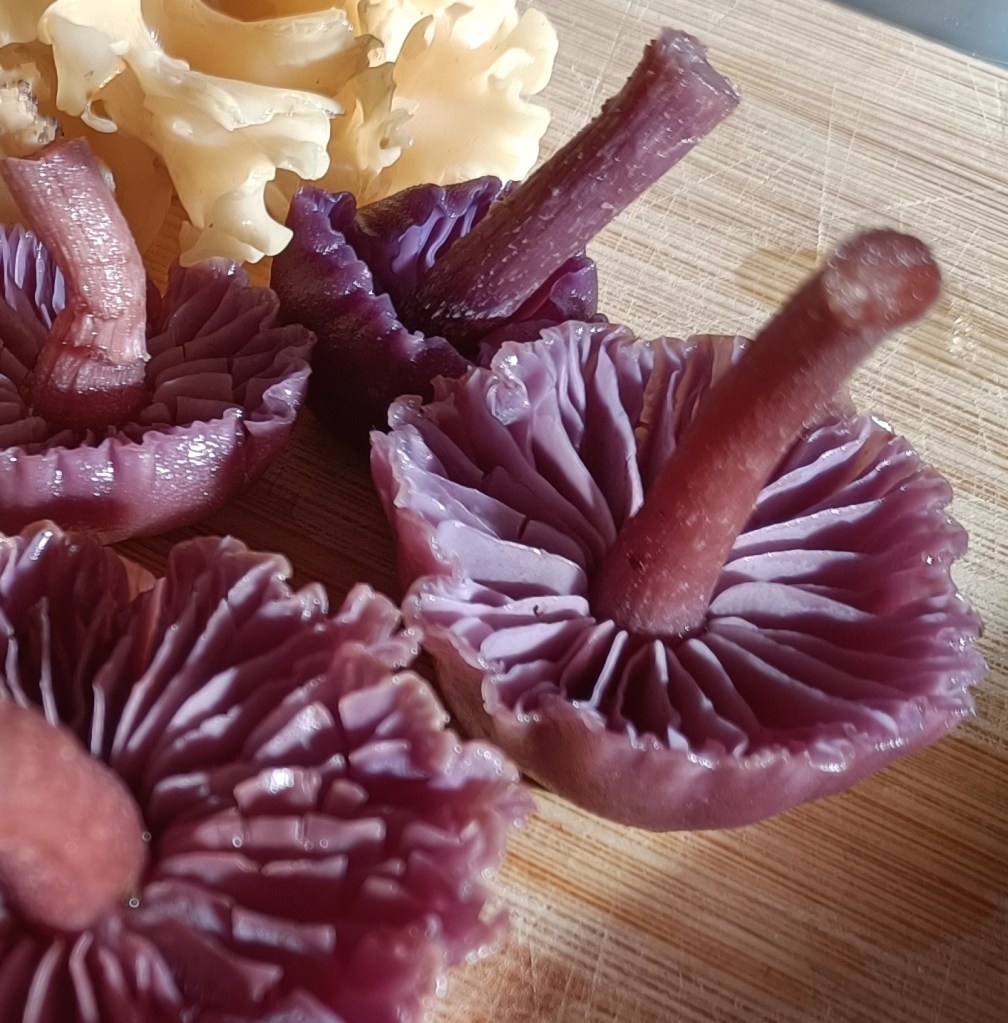
The deceivers are so called due to their variations in colour, making them appear quite different from youth to maturity, and from dry to damp. In the case of Laccaria amethystina, the stipe, gills and cap are initially concolorous and deep purple. When older and also when dry, the cap and stipe can dry to being a buff colour. The gills also become paler when spores are present. The caps are broadly convex with an incurved margin, flattening as they get older, but often retaining a depressed centre and can also have a sort of frilly appearance around the edge.
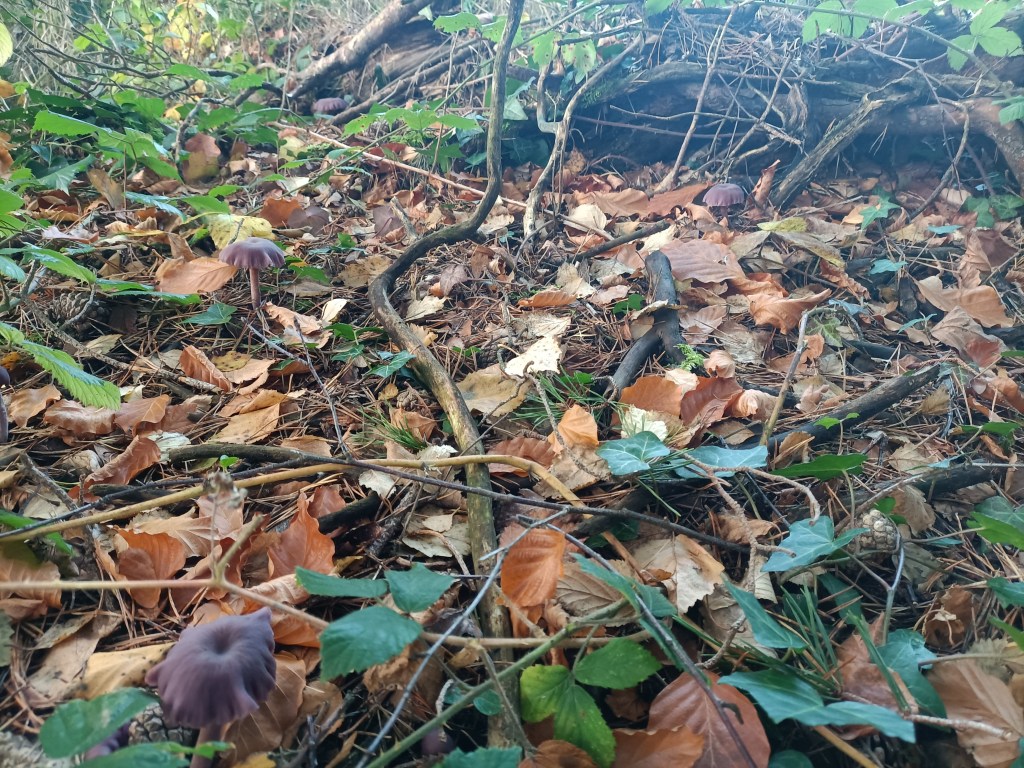
The stipe has a downy base with white fibrils and is tough, turning hollow with age. Somewhat confusingly, the gills are described as adnate in some sources and adnexed in another. The ones I have found have been adnexed, but I will look out for this feature and see if this continues to be consistent.

Laccaria amethystina are ectomycorrizhal with beech trees, and form other mycorrizhal relationships with other deciduous and coniferous trees. They provide nitrogen and phosphorus to their tree hosts as well providing other vital services such as protection from root pathogens and decreasing stress from drought.
You can find these fungal gems growing from the soil beneath their tree hosts, often in troops, from early summer to winter in Ireland and Britain, and across Europe, North America and Asia in temperate zones.
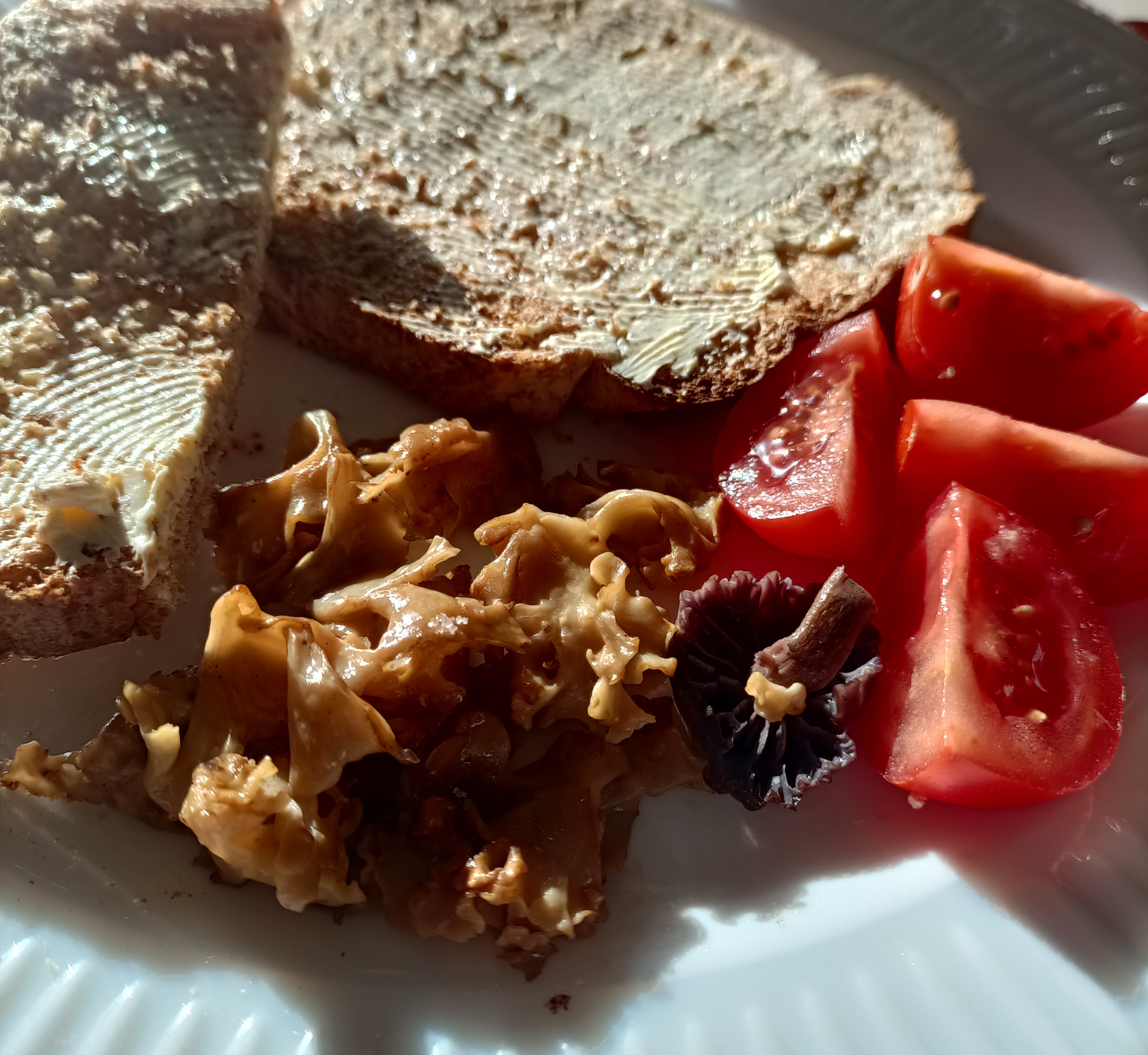
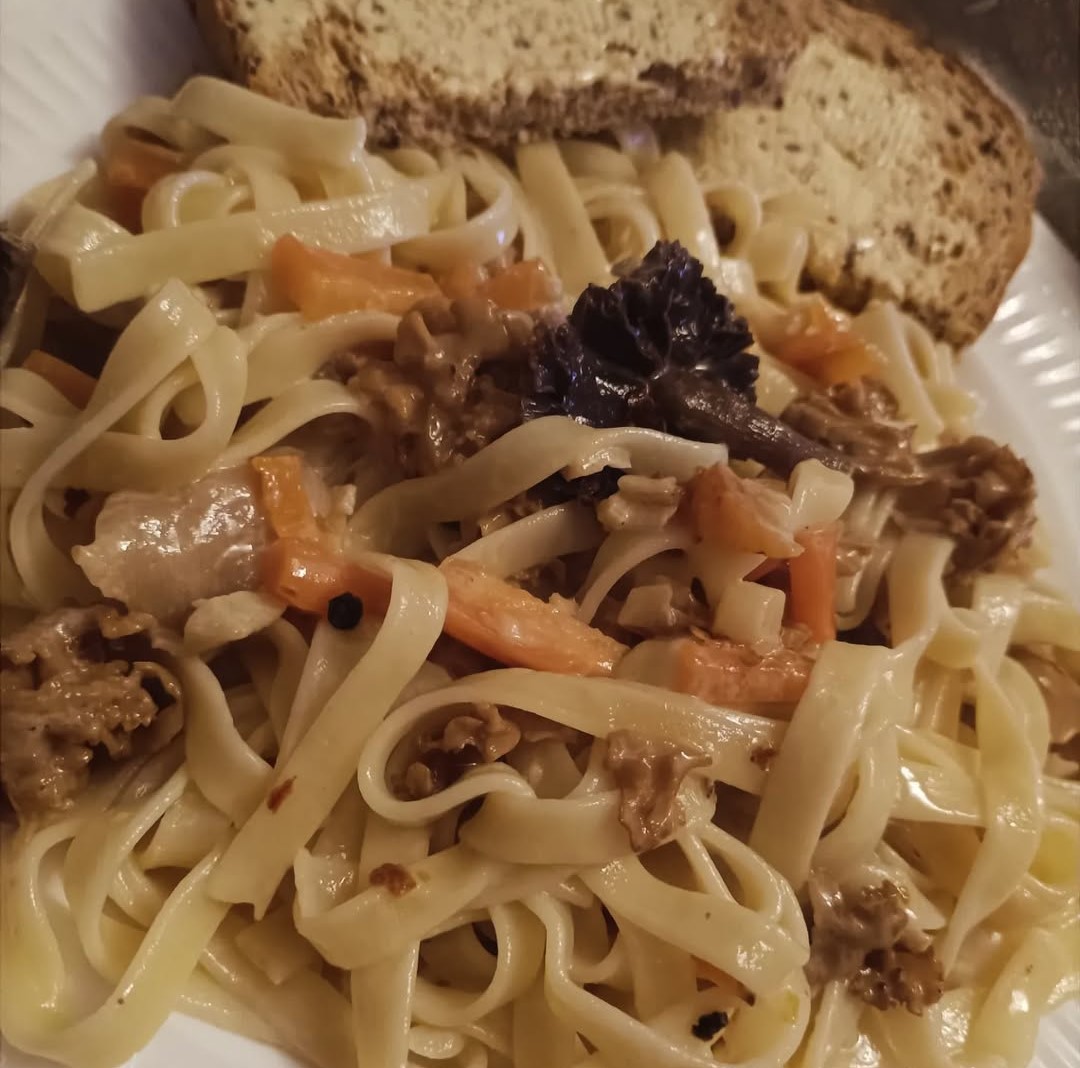
Amethyst Deceivers are known as an edible species, though they are described variably as having a non-distinct taste to having a mildly mushroomy/nutty taste. They retain their colour when cooked making them a great aesthetic addition to dishes. When trying foraged fungi for the first time, I proceed with caution and sauté in vegan butter first instead of diving into more complex recipes. This is so that I can both taste the fungi on their own and check if I have any adverse reactions. I find they have a definite but subtle mushroomy taste. I pickled some with cauliflower mushroom to preserve them, and used them in a creamy vegan tagliatelle dish inspired by a recipe from Wild Food UK. Yum.
Laccaria amethystina are not only pretty and a fun addition to various dishes, they provide important services through mycorrizhal relationships, there is much to appreciate about Amethyst Deceivers and I look forward to uncovering more.
Basic Profile
Scientific name/s: Laccaria amethystina, Laccaria laccata var. amthystea, Laccaria amethystea
Common names: Amethyst Deceiver
Size of fruiting body: 4-10cm tall 0.5 – 1cm, 1.5 – 6cm wide cap
Spores: 8-11 µm, white, hyaline, spherical, spiny
Gills: Widely spaced with shorter gills.
Edibility: Edible, good for colour in various dishes including salads.
Lookalikes: Other purple fungi including Mycena pura – lilac bonnet – but the stipe is not fibrous. Inocybe lilacina – Lilac fibrecap is lilac but can be distinguished as the caps are made of fibres that radiate from centre, the edges of the cap are often split, and the spores are brown.
On the Red Data List (extinct/critically endangered/endangered/vulnerable/near threatened): No
You can follow and connect with me on Instagram and Facebook.

 Mushroomination