
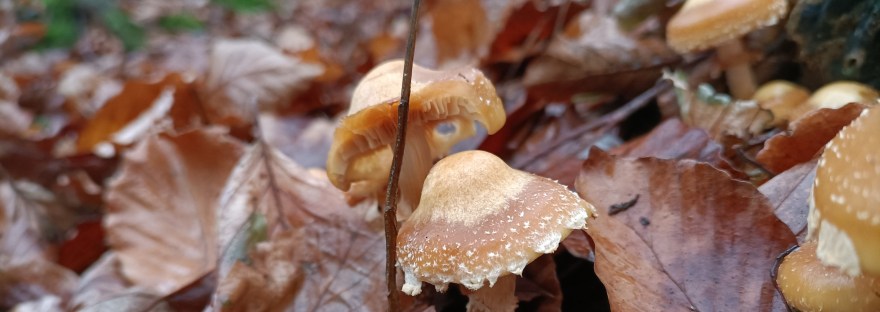

In the unseasonably warm end of December, I was walking in my favourite local woods and spotted these fancy, frilly, distinctive fungi growing out of some decaying timber almost buried by leaves. I couldn’t identify the timber but the woods are mixed, deciduous woodlands.
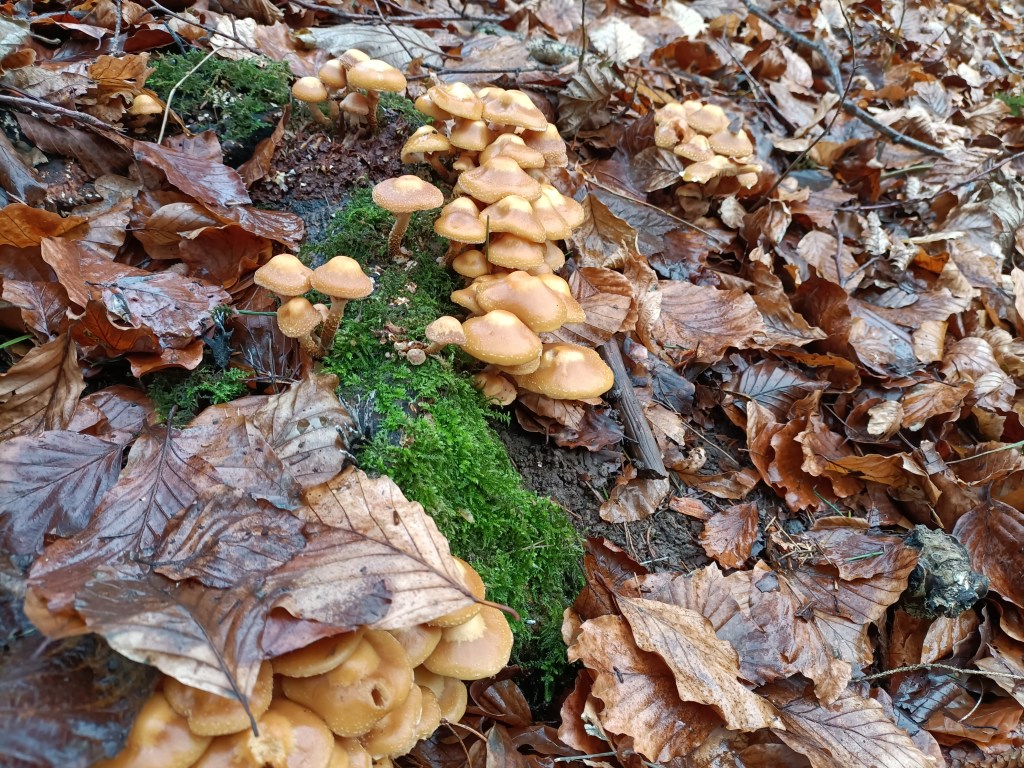
Sheathed woodtufts, Kuehneromyces mutabilis, are known to dry from the middle, leaving a pale middle and darker edge, something that distinguishes them from their main lookalike, Galerina marginata (Funeral Bell) which is deadly poisonous, but dries lighter from the margin inwards. The term for this changeability of colour when wet or dry is ‘hygrophanous’: fungi that are hygrophanous are translucent when moist, and opaque when dry. The ‘mutabilis’ part of Kuehneromyces mutabilis refers to this quality. The caps have also have a blunt umbo.
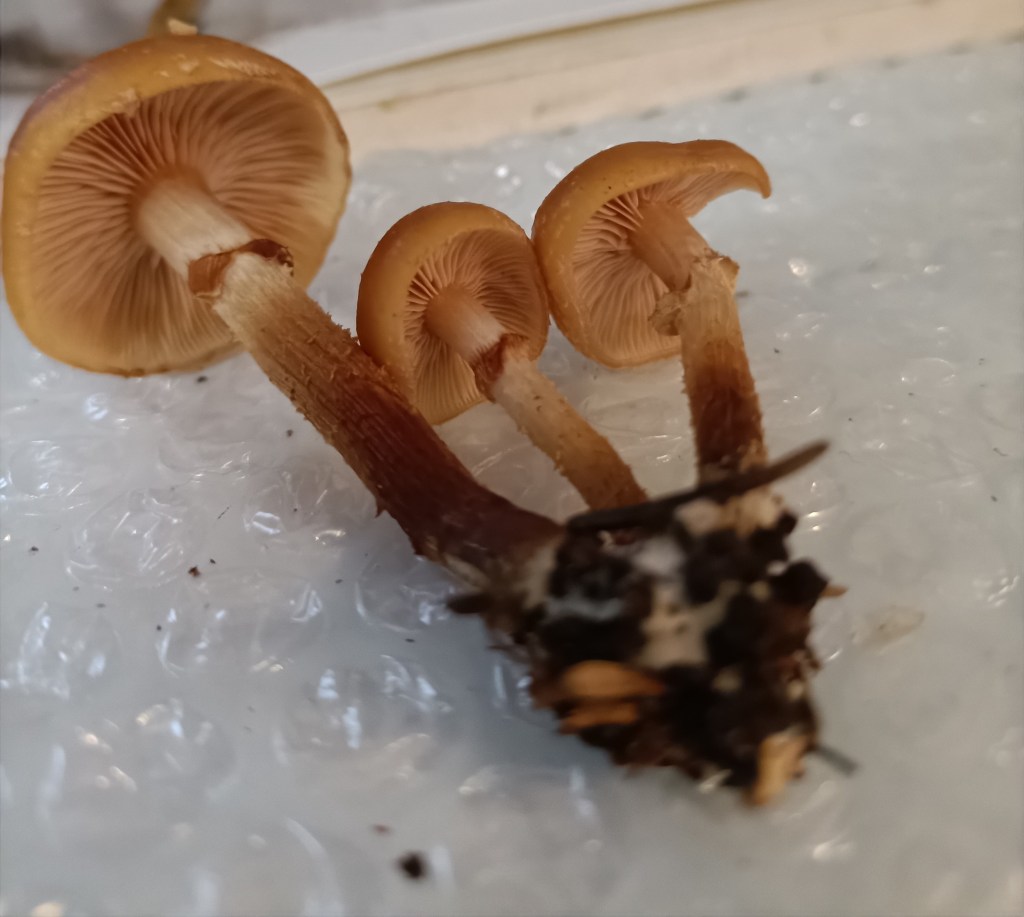
Sheathed woodtuft are saprobic, digesting the wood they fruit upon. They grow in clumps and favour beech but can be seen on other hardwood and deciduous timber too. Their stipes are particularly distinct – cylindrical and often curved, they have a transient ring. Below the ring the stipe is scaley and darker, above the ring it is cream and smooth.

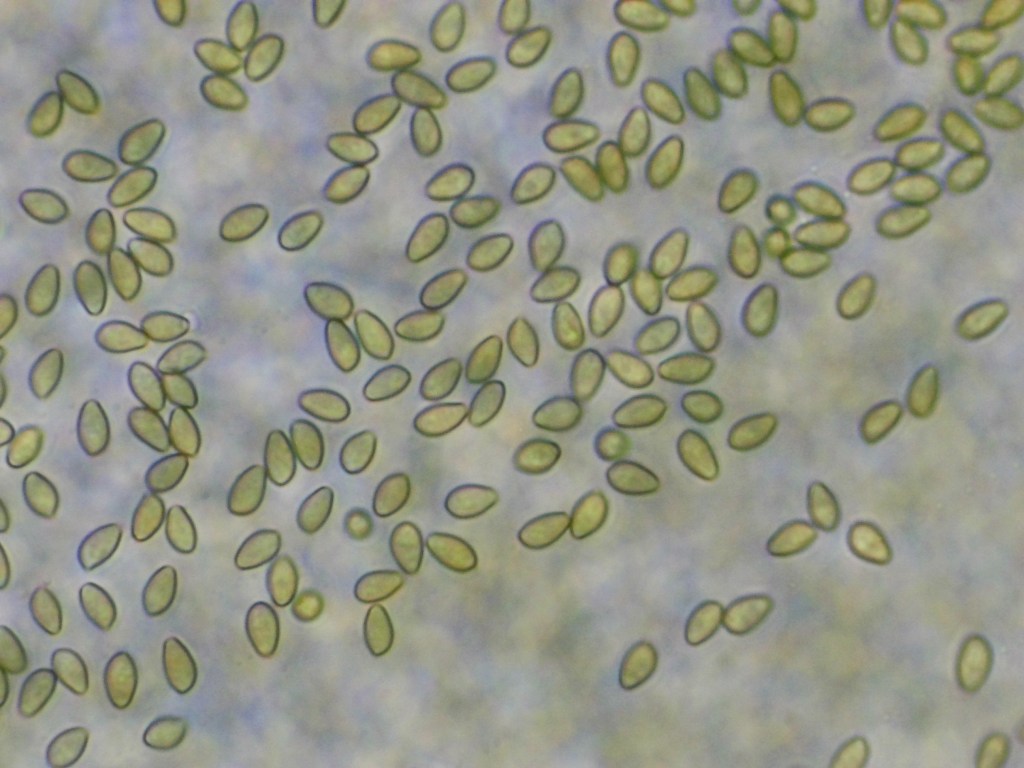
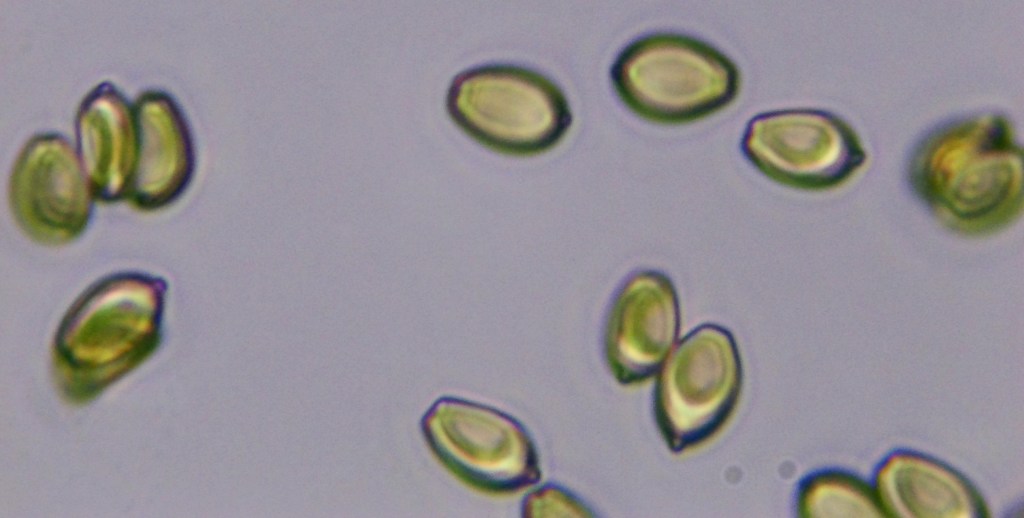
The gills are adnate, crowded and pale, maturing reddish brown to cinnamon with a brown to cinnamon spore print. The spores are almond shaped to ellipsoid, with an apical germ pore, they are smooth – another distinction with Galerina marginata whose spores are covered in small warts.
They are widespread across the globe, common in Ireland, Britain, Europe from Scandinavia to the Mediterranean and seen in mountainous regions in the US and in Australia. There are 32 records on the National Biodata Centre for Ireland, the first from 1925 and the latest from 2014, aside from my recording that hasn’t been accepted yet, they are spread evenly across the country though absent from the northeast. Earliest in the year is recorded from April and the latest from 29th December – the same day I found these. On Cate2 records for the UK, there are 3206 records of Sheathed Woodtuft, evenly distributed across the mainland of Britain and the Isle of Man.
They are considered edible and I have seen them described as ‘rich, meaty but sweet flavour’, ‘edible and good’ and also ‘no distinct taste’. The caps are apparently used for flavouring sauces and soups. Considering their easy confusion with such a deadly species, it hardly seems worth the risk.
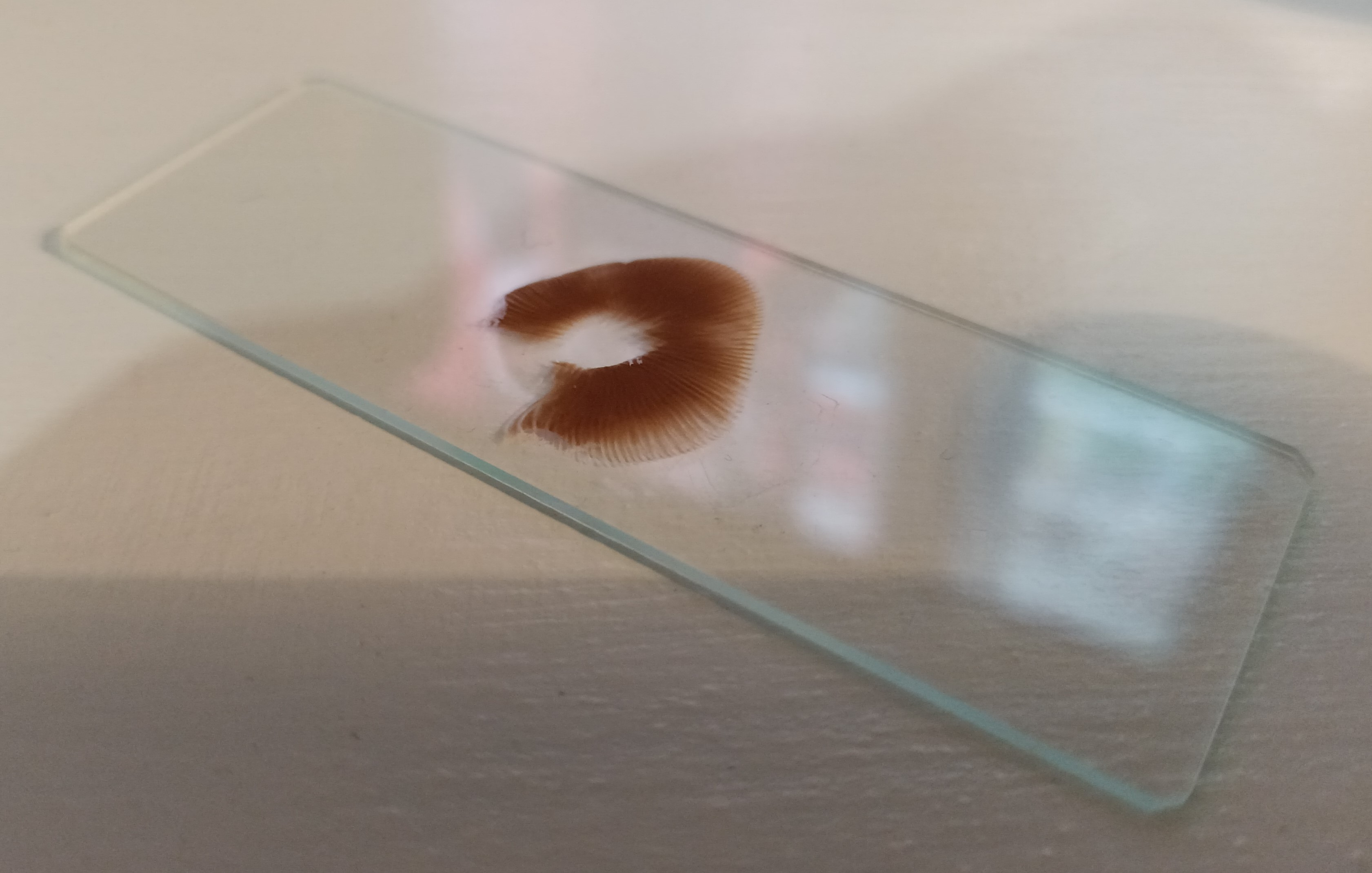


Spore prints on microscope slide, white cartridge paper and black paper
Basic Profile
Scientific names: Kuehneromyces mutabilis / Pholiota mutabilis / Galerina mutabilis
Common names: Sheathed Woodtuft, Two-toned Woodtuft, Brown Stew Fungus, Velvet Toughsank
Size of fruiting body: 3-6cm cap, stipe up to 8 cm tall
Spores: 20-40µm x 2.5-7µm
Gills: Pale, turning reddish-brown to cinnamon. Adnate and crowded.
Edibility: Edible but easily confused with deadly species – Galerina marginata, Funeral Bell
Lookalikes: Galerina marginata also grows as tufts on coniferous and broad leaved wood but does not have scales on its stipe and dries out paler from margin to centre. The spores also differ as they are warty, where Sheathed Woodtufts are smooth. Flammulina velutipes – Velvet Shanks could also look similar, they grow on wood but do not have a ring and their stipes are smooth. Potentially also confused with Pholiota squarrosa and Armillaria species.
On the Red Data List (extinct/critically endangered/endangered/vulnerable/near threatened): No
You can follow and connect with me on Instagram and Facebook.

 Mushroomination