
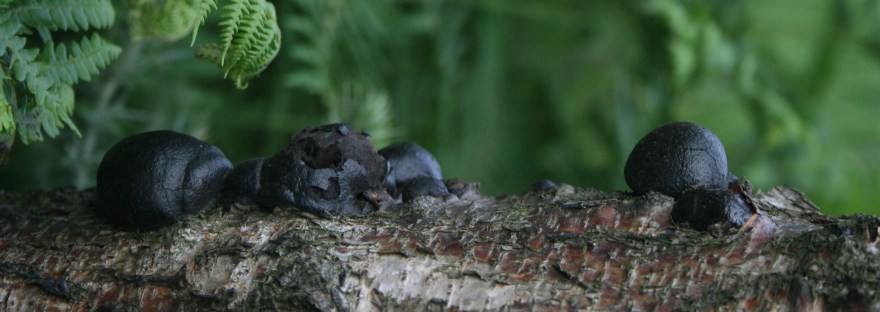
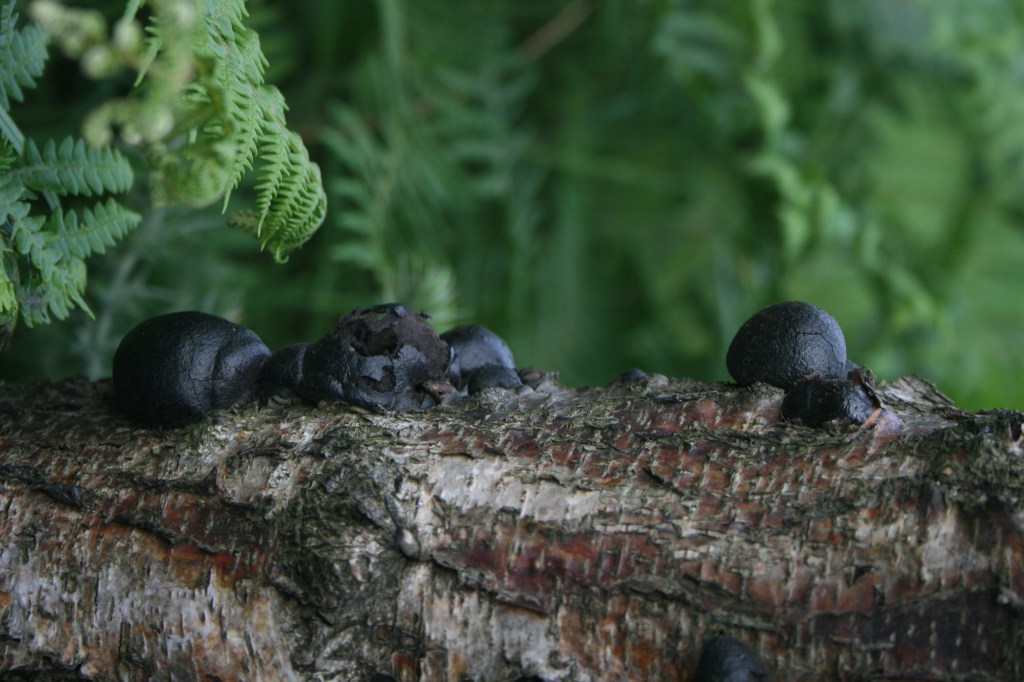
Daldinia concentrica, also known as King Alfred’s Cakes or Cramp Balls can be seen on the dead wood of broadleaf trees, most commonly ash, and can be seen throughout the year in Ireland and the UK. Young Cramp Balls are red to brown with a matte surface. When they mature they become hard, black and shiny.


Daldinia concentrica, Mellieha, Malta Daldinia concentrica, Co. Kildare, Ireland
When cutting open or breaking off the fruit bodies, they reveal a charcoal like inside, with light and dark alternating concentric lines, hence the scientific name ‘concentrica’. They are saprobic, growing on dead or dying hardwood. Interestingly, First Nature cites Daldinia concentrica as growing ‘nearly always on ash’ and that a ‘similar species occurs on beech’. Michael Jordan in his Encylopedia of Fungi of Britain and Europe, states that Daldinia concentrica ‘favours beech and ash’.
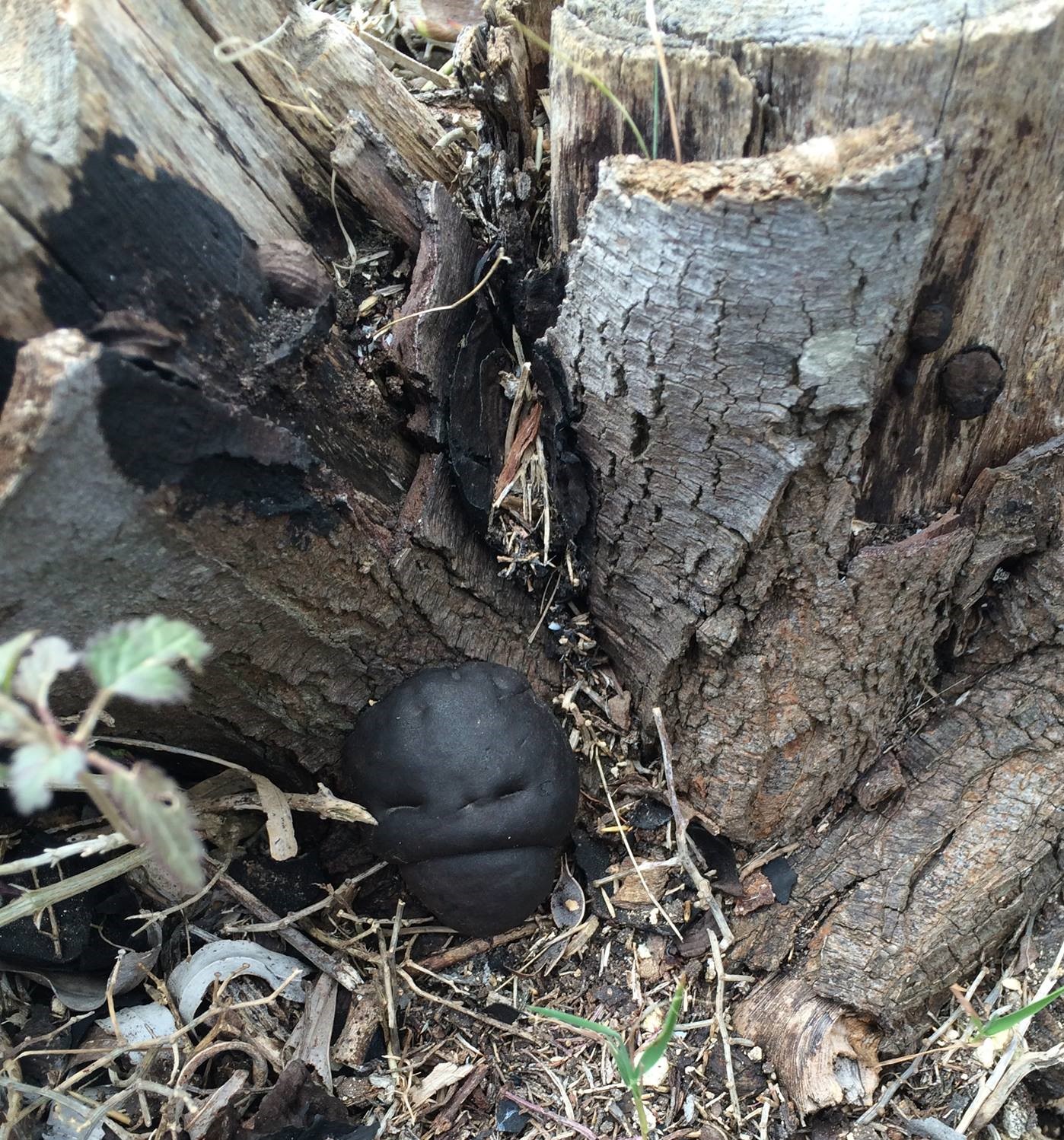

Their cushion shape sits directly onto the substrate and can grow to 10cm across. The individuals depicted just above are some I found in March 2016, Malta, in Mellieha, the stump seems to be an old beech tree and had possibly been subject to some fire. Others in this post, such as the one below, were found in Ireland, Co. Kildare in August 2024, and Co. Wicklow, June 2019.
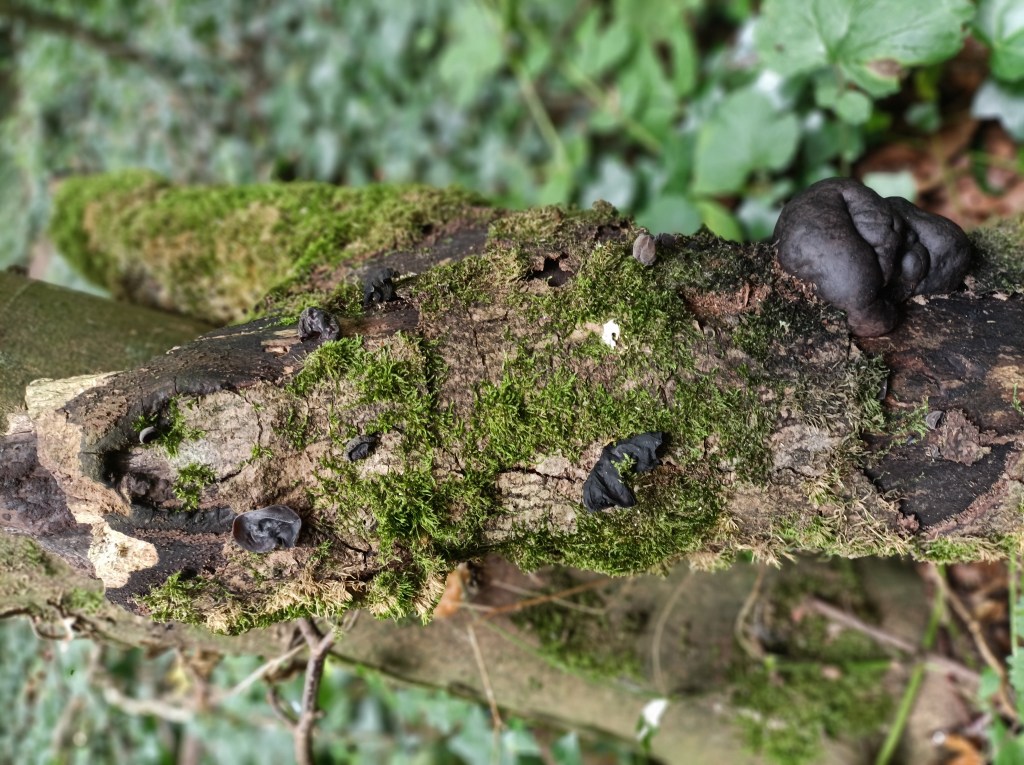
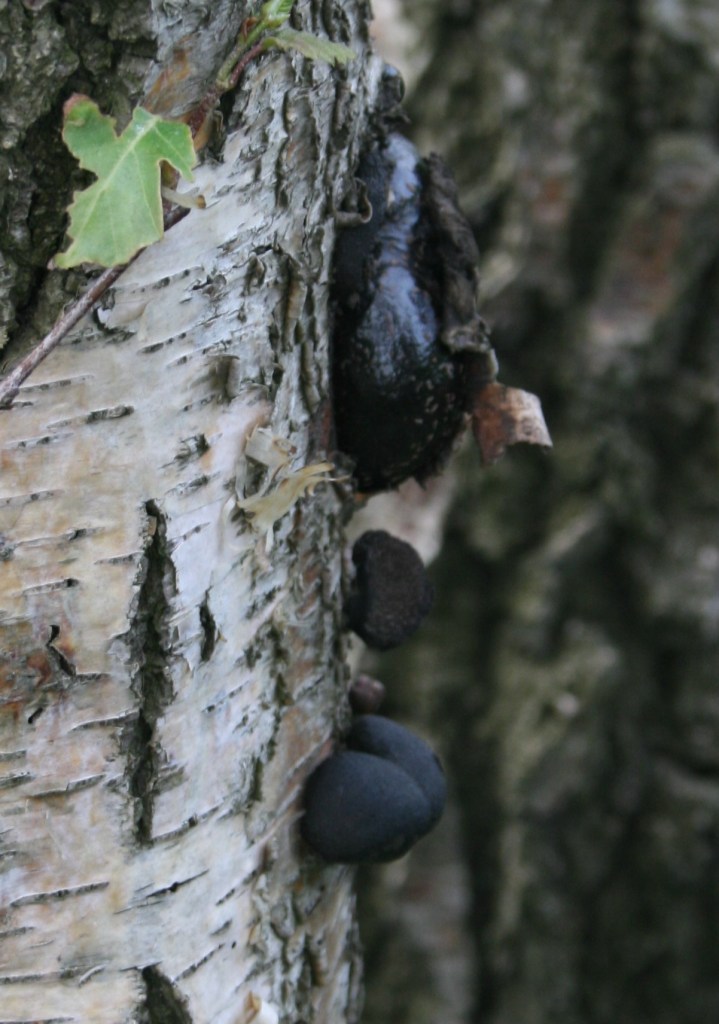
A lookalike –Daldinia loculata – occurs on birch, and is described as a postfire species. On Cate2, there are many records of Daldinia concentrica on both beech and ash – 214 on beech, though much more on ash – 700 records and just 23 records on Silver birch. Daldinia loculata has just 23 records in the UK, all on birch species, aside from one on a Swedish whitebeam. 15 records of D. concentrica exist on the National Biodata for Ireland site, none of D. loculata.

The English Common name of King Alfred’s Cakes comes from an old tale of King Alfred who sought shelter in a peasant’s home, whilst he was hiding from vikings, and forgot to watch buns in the oven and they burned. Fitting then, that these fungi are considered inedible and that they are part of the group of fungi who can help with starting fires. The other common English name of ‘Cramp Balls’, comes from the belief they are thought to help with cramps, just by carrying them around.

In August 2024, I took home a sample to try to see some spores under the microscope. A warning to anyone wanting to follow suit, or take a spore print for whatever reason. The spores get everywhere and are very abundant. The only suitable container I had in my car was a spare shoe, so I put my specimen in said shoe, open side up, left it for a few hours and my shoe was full of black spore dust. However risky for shoes, this perk means it is perfect for getting lots of spores for a slide. The spores of Daldinia concentrica are black, non-septate, with a ‘cleft’ to one side, smooth and ellipsoidal. The asci tips become blue by using Melzer’s Reagent, as informed by Michael Jordan’s ‘Encyclopedia…‘. This is an element of microscopy that I have yet to delve into, as I have not yet found an Irish supplier, if anyone knows one, please let me know.
King Alfred’s Cakes are a great fungi to spot, with interesting uses and tales, I always find delight in spotting them, and will surely be paying more attention to their host trees from now on.
Basic Profile
Scientific name: Daldinia concentrica
Common names: King Alfred’s Cakes; Cramp Balls; Coal Fungus
Size of fruiting body: 2 – 10cm
Spores: 12-17 x 6-9μm
Gills: None
Edibility: Inedible
Lookalikes: Daldinia fissa and Daldinia vernicosa are both scarcer and smaller and their substrate is burned wood, in the case of D. fissa specifically burned gorse; Daldinia loculata is more rare, shiny and more typically on silver birch.
On the Red Data List (extinct/critically endangered/endangered/vulnerable/near threatened): No
You can follow and connect with me on Instagram and Facebook.

 Mushroomination