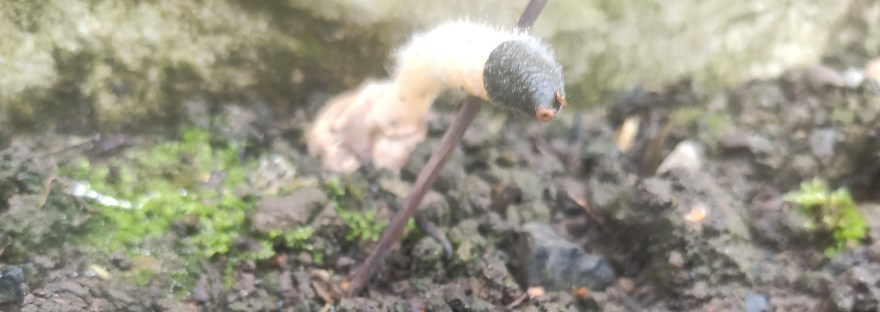
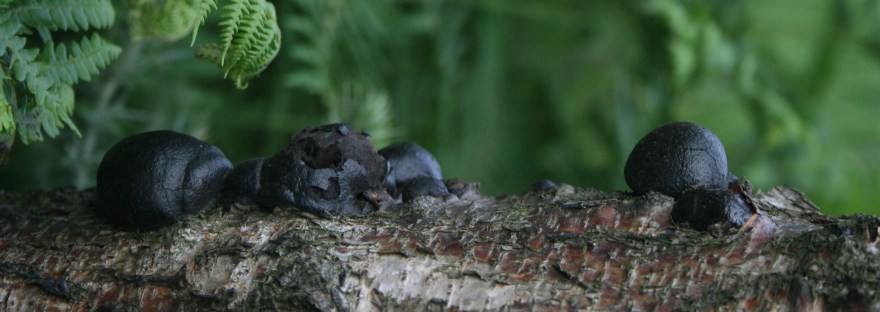
Daldinia concentrica, also known as King Alfred's Cakes or Cramp Balls can be seen on the dead wood of broadleaf trees, most commonly ash, and can be seen throughout the year in Ireland and the UK. Young Cramp Balls are red to brown with a matte surface. When they mature they become hard, black and… Continue reading Daldinia Concentrica, King Alfred’s Cakes, Cramp Balls
Tag: biodiversity
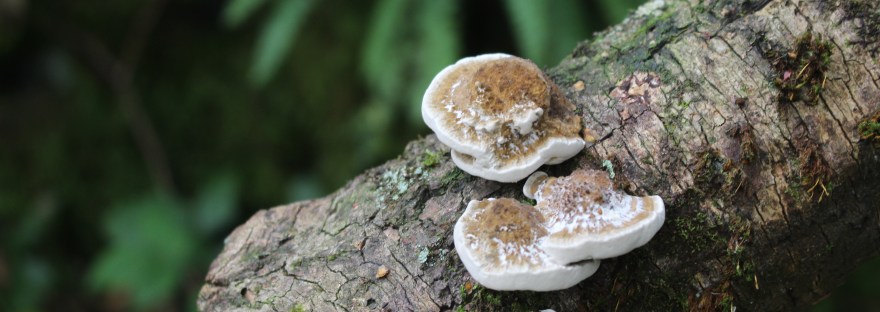
Daedaleopsis confragosa, Blushing Bracket, Co. Wicklow, Ireland
I am rolling the clock back to September 2020, when I first went to what has become one of my favourite foraying spots in County Wicklow. The abundance and diversity of species took me off guard and I spotted many different fungi including boletes, brackets, puffballs, cauliflower fungi, fly agaric, Elfin saddle, and many more.… Continue reading Daedaleopsis confragosa, Blushing Bracket, Co. Wicklow, Ireland
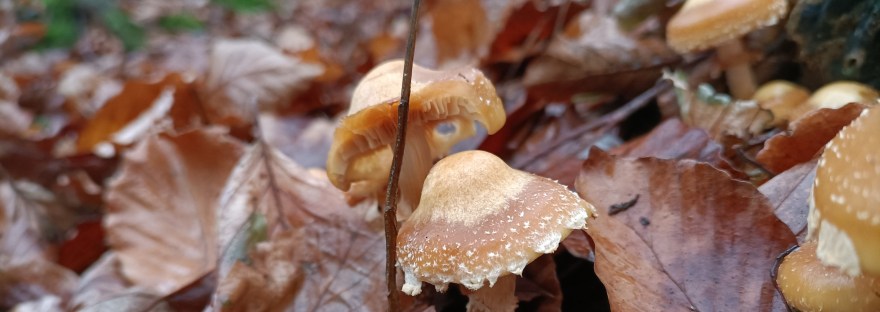
Kuehneromyces mutabilis, Sheathed Woodtuft, Co. Kildare, Ireland
In the unseasonably warm end of December, I was walking in my favourite local woods and spotted these fancy, frilly, distinctive fungi growing out of some decaying timber almost buried by leaves. I couldn't identify the timber but the woods are mixed, deciduous woodlands. Sheathed woodtufts, Kuehneromyces mutabilis, are known to dry from the middle,… Continue reading Kuehneromyces mutabilis, Sheathed Woodtuft, Co. Kildare, Ireland
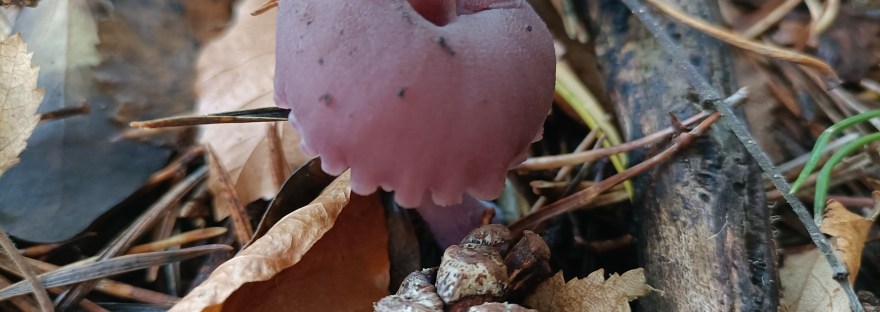
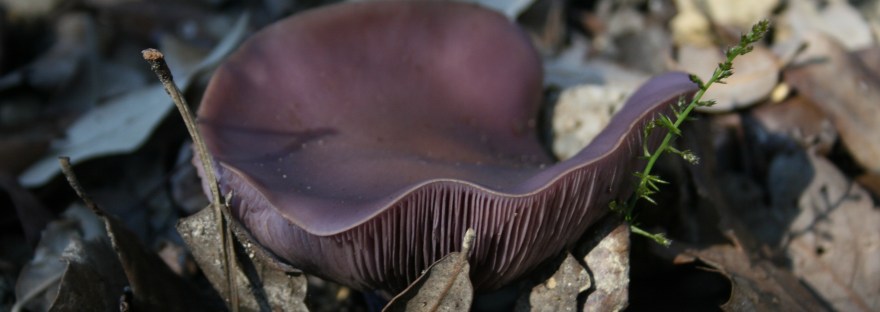
Laccaria amethystina, Amethyst Deceivers
Laccaria amethystina, Eskrigg Nature Reserve, Dumfries and Galloway Laccaria amethystina, Amethyst Deceiver, is another of my favourites, on account of its distinct colour. They can camouflage amongst the autumnal leaves and other forest litter in dark woods, in their majestic plum tones, but even more so when older when they can be mistaken for their… Continue reading Laccaria amethystina, Amethyst Deceivers
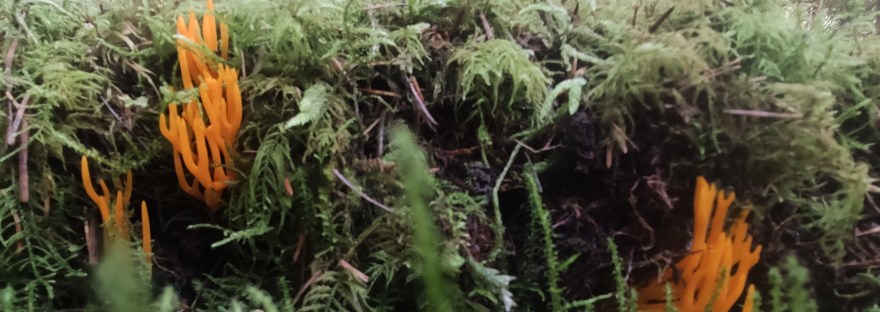
Calocera viscosa, Yellow Stagshorn
C. viscosa, Roundwood, Co. Wicklow, November '23 Calocera viscosa, common English name Yellow Stagshorn. These little yellow antlers grow from dead conifers, including stumps and roots. Some may look as though they grow from soil but a little digging can reveal buried wood or long roots penetrating into tree roots. Their beautiful bright yellow colour… Continue reading Calocera viscosa, Yellow Stagshorn
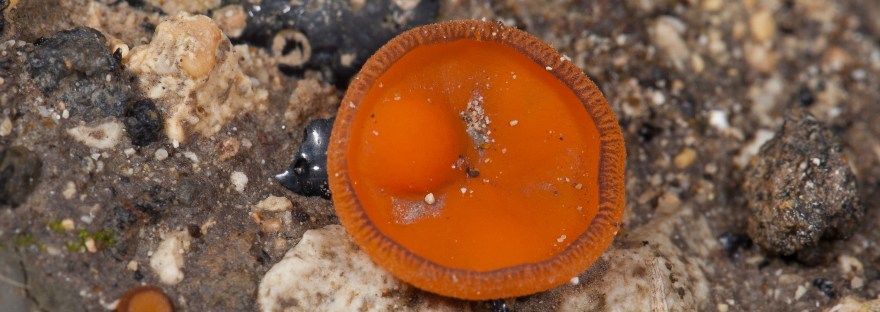
Melastiza sp., Monte Altore, Sicily
A Lesson and a Correction In my 2024 Calendar I cited these as Scutellinia sp. I recently discovered it was something a little different. It's been almost 10 years ago since I spotted these tiny orange discs in the gravel of a long driveway flanked by a neglected olive grove and agave in Sicily. The… Continue reading Melastiza sp., Monte Altore, Sicily
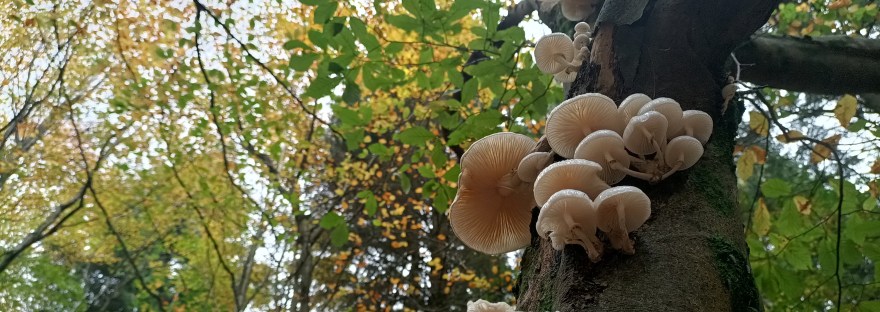
Mucidula mucida, Porcelain Fungus, South Kildare, Ireland
I remember when I first saw Mucidula mucida. I was on a Buddhist retreat in Co. Wicklow 5 years ago. The theme was connecting with nature. The retreat was very rural, with part of the Wicklow Way running along the top side of the property, Coillte forestry on the other side of the trail but… Continue reading Mucidula mucida, Porcelain Fungus, South Kildare, Ireland
Lepista nuda, Wood Blewit, Sicily
Lepista nuda, 28th December 2015 In 2015, I was living and volunteering in the west of Sicily, for a Maltese environmental NGO whose aims at the time were to build an eco-community/eco-tourist village in the mountains between the beautiful villages of Vizzini and Licodia-Eubea. Villas had been in the area historically for at least a… Continue reading Lepista nuda, Wood Blewit, Sicily
Mutinus caninus, Dog stinkhorn, Nottinghamshire, UK
21/11/22 At the end of November I worked remotely from my parents’ lovely house in rural Nottinghamshire. I owe much to my mum for inspiring my interest in mushrooms, she’s really excellent at spotting them and her love for nature in general, is infectious. In their garden, they’ve had some great fungal wonders including Gliophorus… Continue reading Mutinus caninus, Dog stinkhorn, Nottinghamshire, UK
Lactarius turpis, Ugly milkcap, Howth, Co. Dublin
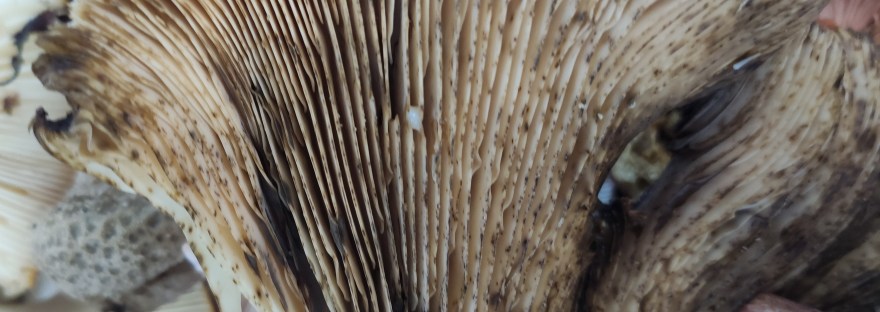
On a lovely foraging workshop in October, led by the delightful Nicole from Howth Foraging - in a mixed woodland in County Dublin, Ireland, I spotted many treasures, not necessarily good for eating, but catching my eye none-the-less. My favourite find was the so-called Ugly Milkcap, Lactarius turpis. I have an affection for things nicknamed… Continue reading Lactarius turpis, Ugly milkcap, Howth, Co. Dublin
Terana caerulea, Cobalt crust, Nottinghamshire, UK
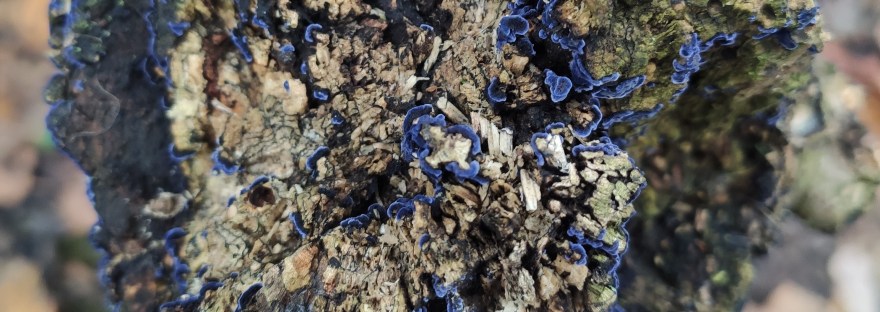
Terana caerulea, Cobalt crust, Bilsthorpe, November 2022 At almost the end of a delightful walk spotting fungal treasures in a deciduous wood on a rewilded old train track in Bilsthorpe, rural Nottinghamshire, I spotted some lovely Auricularia auricula-judae (wood ears) on a gnarly, jaggedy, tall stump of a tree. I then looked up and wondered… Continue reading Terana caerulea, Cobalt crust, Nottinghamshire, UK
Phallus impudicus, Common stinkhorn, Co. Wicklow & Catania
5th September 2020 I love how diverse the forms of fungi can be, and this is (probably - apart from its very similar brother P. hadriani) the rudest looking fungus in the west, sure to illicit scoffs and giggles when seen. This delightfully protruding formation is the common stinkhorn. It first emerges from the ground… Continue reading Phallus impudicus, Common stinkhorn, Co. Wicklow & Catania
Auricularia auricula-judae, Wood ear, Rabbit Ings Country Park, South Yorkshire
26/03/2015 Auricularia auricula-judae, Wood Ear, Rabbit Ings Country Park, Barnsley Wood ears, found all year round, are most commonly found on elder trees, either living or dead. They're a good treasure for finding in spring and winter when other more obvious fungi may be elusive. Elder bark, with its distinctively, gnarly, furrowed bark, offers a… Continue reading Auricularia auricula-judae, Wood ear, Rabbit Ings Country Park, South Yorkshire